


- Probigbets has been developed to provide clear insight into the activity of all major global betting syndicates, in effect revealing to you what positions the top professional punters are taking in the market, in real time. Bets placed by syndicates and professional punters will appear here, as they are executed by our global network of brokers and bookmakers. It is then your choice to decide if you will take the side which the professional syndicates have backed, or alternatively any perceived value after the Pro bet has been placed. Allow Probigbets to reveal what the professional syndicates are betting on and make an informed betting decision.
Performance (USD)
| Overall | 26018684 |
| Last 6 Months | 14881875 |
| Current Month | 939147 |
| Last Week | 248903 |
News
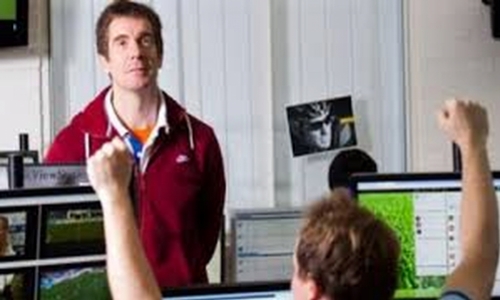
Fruede 11 Mathew Benham Interview
2013-10-19
Before you purchase a lottery ticket today, let us provide you with an insight into the thought processes of a man widely considered one of the world’s best professional punters. Matthew Benham operates one of the world’s largest betting syndicates (Smartodds) from his base in London and reveals what key factors you need to consider for ultimate success in football betting.
Matthew Benham, your professional betting operation could be described as a type of betting factory with 80 permanent employees. How did you come up with the idea that professional football betting could be a business/investment fund?
I always liked math and already football, and around the turn of the millennium, there was the option to combine both.
In what way?
Previously, you could only bet at very inefficient prices at traditional bookmakers. In addition, it was not possible to bet on individual games, but as with Toto Allups and Multiples only on several matches simultaneously. As the Asian betting market for people from the west opened up entirely with new forms of betting and greater liquidity, much tighter calculated conditions were suddenly possible for position taking. We mainly bet Asian Handicap markets. This is a bet where there are virtually no draws and hence the way our business prices a particular market can be more accurately calculated.
It does not sound as if gambling has consumed your life in a negative way?
Oh no, I do not like that line of thinking. I never bet for fun or to pass the time. With us, it's about probability calculations using mathematical models. I have also relied heavily on my professional background. I studied physics at Oxford, and later was a derivatives trader in the city of London for a major German bank.
Against whom do you bet, the Bookmaker or your competitors?
No, one must not think of the linear one vs one relationship. Bets are a market, where prices are constantly changing. We try to find market weakness and use our models to capture value where we perceive it exists.
You have had your business (Smartodds) set up now since 2004, how long did it take to become profitable?
Even after a few months our performance was healthy , and even with betting markets still very inefficient at that time (relative to the Asian market conditions today).
What would be your most important advice for an amateur who wants to improve their chances?
The most important thing is you have to keep records of your bets! In addition to only investing on what you perceive is value in the market.
Why?
If you do not, one only remembers the cases in which one has been right. Or you talk yourself into thinking that you just had bad luck. Its human nature.
We tend to fool ourselves?
Correct. And indeed crucial. Therefore, I would also ask anyone who wants to systematically bet to read one of my favorite books: “Thinking Fast And Slow" by Daniel Kahneman . A chapter is called “The illusion of validity," and explains exactly how ridiculously over-optimistic people in terms of their predictive capability are. Even with the most flimsy evidence we draw our conclusions with conviction. There is no doubt human nature impairs our predictive capability. This is also the reason why correct predictions are not far from the intersection of a pure random distribution even with experts, such as in the financial markets, the quota.
“Fooled By Randomness” by Nassim N.Taleb is another insightful book I would like to recommend to all sports trading professionals. It also discusses the above points of human nature and engrained influence.
So in the world of sports betting you should replace gut feeling with something systematic?
Right. In the chapter “intuitions and formulas " Kahnemann finds that even experts with years of experience were found to be worse at predictions than the use of an extremely simple formula . A famous example is whether a couple's relationship will hold. On one side, a psychologist interviewed the couple in detail and also gathered substantial information about their coexistence. Whilst on the other hand looked at just how often couples have sex in a week minus how often they argue with each other. This simple formula was much better than what the psychologist predicted. That is why we never say that Manchester United will win the game, instead we generate an exact probability and assess whether this is reflected in the current market price. Our in house rating is that “Manchester United has a 55 percent chance of victory”. We certainly don’t rely on broad and general qualitative statements, we instead highly quantify all information available to us, which drives our models and identifies any value out there in the marketplace.
So should punters develop their own technical betting models and continue to develop them?
Why not? On the internet there are plenty of templates for which you can start and can convert for your own purposes/style.
But then the questions arise about what information to include there. Traditional betting previews always indicate how teams have played in recent years against each other. Are you interested in that?
Series data tends to be a much more common accident than most people think. We call this " noise " in contrast to " signal " to which we should listen. Suppose the penalty shootout between England and Germany. England has lost six of seven and Germany has, apart from the European Championship final in 1976 against Czechoslovakia, won all the penalty shootouts in major tournaments. But when games have been decided by coin toss, there may be very similar series. However, the nature of human thinking would then focus on German shootout historical success or effectiveness as reflected in the historical penalty shootout record. While I would not go out with the next penalty shootout between England and Germany rated a 50-50 chance, I would be very close.
The history of German shootout efficiency for you is classified as noise?
In all interpretations the risk is that they will make your numbers worse. For example, we had a discussion about Borussia Möncgladbach after they had won earlier in the season in qualifying for the Champions League at Dynamo Kiev, but were nevertheless knocked out. One could then say that moral is cracked because they did not make it into the Champions League. Or you could claim that moral is better because they had a good away game after the 1-3 home defeat. The long trip to Ukraine was negative because of the travel burden, or the common journey has grown the team harmony. You can always find factors that are consistent. But if one tries to include all in the model, they may break it, hence you can ignore some factors for the better.
For your betting model even the recent results of a team are supposedly almost unimportant, many readers will find that hard to comprehend?
Results are not entirely unimportant, but they are more noise than is commonly thought.
Because it is often just luck that a ball hits the inside of the post and finds its way into the goal?
Right. Luck is always a very decisive factor in football, because there are so many variables. In the last six years the German Cup has been won once by the fourth-best and once by the third-best league table teams in 2007 and 2009 from VfB Stuttgart and VfL Wolfsburg. I do not mean that these teams have played beyond their means or their potential exploited more than the competition. No, they were from their services here as we attempt to capture very precisely, third or fourth best. The rest was luck.
That's a steep proposition!
We can show, however by making our own rating to determine the quality and the current form of a team. And that's better than the table. They always say there is a balance of good and bad luck over the course of a season and the table does not lie. But that is simply not true.
Your rating is produced by looking less at the goals as to the chances that play out for a team or the chances the team permits?
It's also about the quality of scoring chances or possession and its quality. One sees often that a team allows a lot of scoring chances in the lead. If they then conceded a goal, everything is in order; here the players have made lots of mistakes. However if they have conceded a goal during this period it may appear as if the whole defense was bad. But the matter is more complicated.
You sit with dozens of your analyst’s monitorring each game and compiling the statistics, the data from matches around the world is systematically collected allowing you to arrive at a statistical assessment of the form of teams?
Right. But most people think of statistics as the useless stuff which is now cut around the ears on television. "This is the sixth time that he has scored a goal against a team in yellow.” With an academic discipline this has little to do with statistics. We use the concept of "predictive utility”, and as a statistic the former is worthless.
So you have to find the right stats?
Right the quality and relevance of statistics used has to be there.
In how many games you bet every week?
We cover 40 to 50 leagues, because you can only put limited investment on individual games. In order to increase revenue, we need to invest on more games.
Does the business involve manual input from mathematicians, IT experts and game analyst. or is it now automated on matches?
It is becoming increasingly automated, in the long term that is our goal, In very small leagues, where you can bet on a few games, it's for cost reasons, because the cost of manual analysis/execution teams is simply too large.
Before each game day is there a meeting of your experts, to discuss the upcoming betting?
Yes, because of course there's always room for human intervention. A few years ago we had a case in which a very inexperienced staff member wanted to act upon a strong quantitative signal to invest heavily on Sporting Gijon in the Spanish league. Whilst the quantitative conviction made complete sense if you looked at the numbers alone, there was also reliable information that the players wanted to get rid of their coach which affected motivation. Hence common sense and other qualitative factors will also be considered.
This means that you also have a network of informants who can tell you where there is conflict or where important players may be out or a strong doubt?
Yes, we are in contact with over a hundred people who are well-wired into their countries. These are mostly journalists or even well-informed fans.
How many bets are placed at any one time?
Oh, that's a lot.
When is a week considered successful?
If we win more than half of the bets. That is our goal.
To what extent does match fixing effect your business?
Negative, of course. Because our model is mathematics based, we trade whenever we believe that the bookmaker or the entire betting market is wrong. But if the market trades differently because games are being manipulated this can lead us astray. If it is very extreme, you can clearly see the match is bent and stay away from it, but not always.
How often does that happen?
It is much more common than most people think.
In early February, Europol reported a total of 380 games in recent years that moved abnormally. How has the problem developed in your view?
In my view, it is easy to reverse. In addition, it has moved from league football into international matches between small football nations. But the manipulations are more extreme. The classic example of this a recent Asian Cup, where 20 minutes before the final whistle large bets were placed suddenly that three goals would be scored. And then one team has clearly stopped in defense to allow these goals.
Are there any leagues that you are not active in because of this problem?
We are suspicious of many Eastern European leagues. Traditionally, one would think that Italy is one of the worst in Western Europe, but there the police are now very active. Bad however, are Austria and Spain. In Spain and Italy, however, it is not necessarily gambling related. It is more related to teams who still need points in a relegation battle or for the ascent.
How does it work in Germany?
A few years ago it was very bad, even in the Bundesliga there were some ridiculous market moves that suggested matches had been fixed.
Are there any matches you are willing to talk about?
Several, of note in 2004 and 2005 are two Bundesliga games, the 1:5 Kaiserslautern Hannover 96. The price had decayed too rapidly until three or more goals difference before the game changes drastically. Obviously people knew how the match would finish, and bet accordingly with abnormally large sums of money invested.
And how is it now?
It has become much better in the German first and second division, with no striking now for several years. Presumably, the players no longer have the feeling that manipulations are so risk-free, or as it was in 2004. There is now also more scrutiny from the industry bodies FIFA, UEFA, the English Football Association and the German Football Association.
Have you ever spoken to associations?
Yes, I have. The former UEFA security chief Peter Limacher said in 2005 that the so-called early warning system is a total sham. It looks concerned only with the European betting market and on bets that are completed before starting the game. But the scammers have almost always been set in Asia where they can find greater liquidity. They also will wait until a game is turned “in-play” to take advantage of higher betting limits on particular markets. But in my opinion the governing associations face a massive conflict of interest similar to when the International Cycling Union were stuck on this issue of Lance Armstrong and doping. It affects the business negatively when something like this comes out .People with integrity really need to step up and make the big decisions here even if it costs some short term pain for the beautiful game.
Success in the betting business has enabled you two years ago to acquire a majority stake in London's third division side FC Brentford, of which you were a childhood fan. Do you actually bet on your own team?
Never, it is strictly prohibited.
And how was it before you were professionally tied to the club?
I had no problem with it, not even to bet against Brentford.
Strange situation, to bet as a fan against his own team, right?
Yes, that was sometimes a bit tricky. But if I thought that this is the right bet in terms of value, I place it.
How does your viewing of the game differ from others?
Above all, I do not like to talk during the game. It may sound a bit snooty, but a lot of people talk a bunch of crap.
Give the German coach Uwe Rösler some hints?
No. I will say I do find that teams are often too happy to settle for a draw after a certain point in the game. There are just too many draws in football, when you consider that a victory with three points will be rewarded and a draw with only one. In general, there is the wrong tendency to avoid risks. i.e. the risk reward ratio is not clearly understood by many managers.
What do you mean?
If you ask people in football, which teams are really professional when it comes to defending a lead, call all the Italians. Here lies the logical error behind it, in this situation to be a padlocked gate. Because that drastically reduces the chance even to score a goal, and so reduces the chance of a victory. And when a team takes a central defender forward in arrears five minutes before closing, the opponent often thinks: They are now more offensive, so we need to be defensive. A more logical line of thought may be: Now the opponent is out of balance and we are opening up more spaces. The best in executing this projection are the Germans. Obviously, it is expected in Germany that you can still continue playing forward after taking the lead.
What is the best advice for amateur punters?
Very important is: you have to be taking the best possible price and only when your research signals value. Hence having accounts with a number of bookmakers helps.
Do you bet early or on a game?
No, we bet mostly on game day. This is when most information is available and the limits are high enough on markets to get a bet on in size. But the dilemma for us is the closer to the start of the game the more the likelihood that the market is right! In this case not much value can be found. However betting on early markets where prices are weak and the market is wrong will only allow a professional trader to invest a small amount. You should also specialize in a particular league such as German Second Division and when you find a statistical edge take advantage when value appears in the corresponding market.